
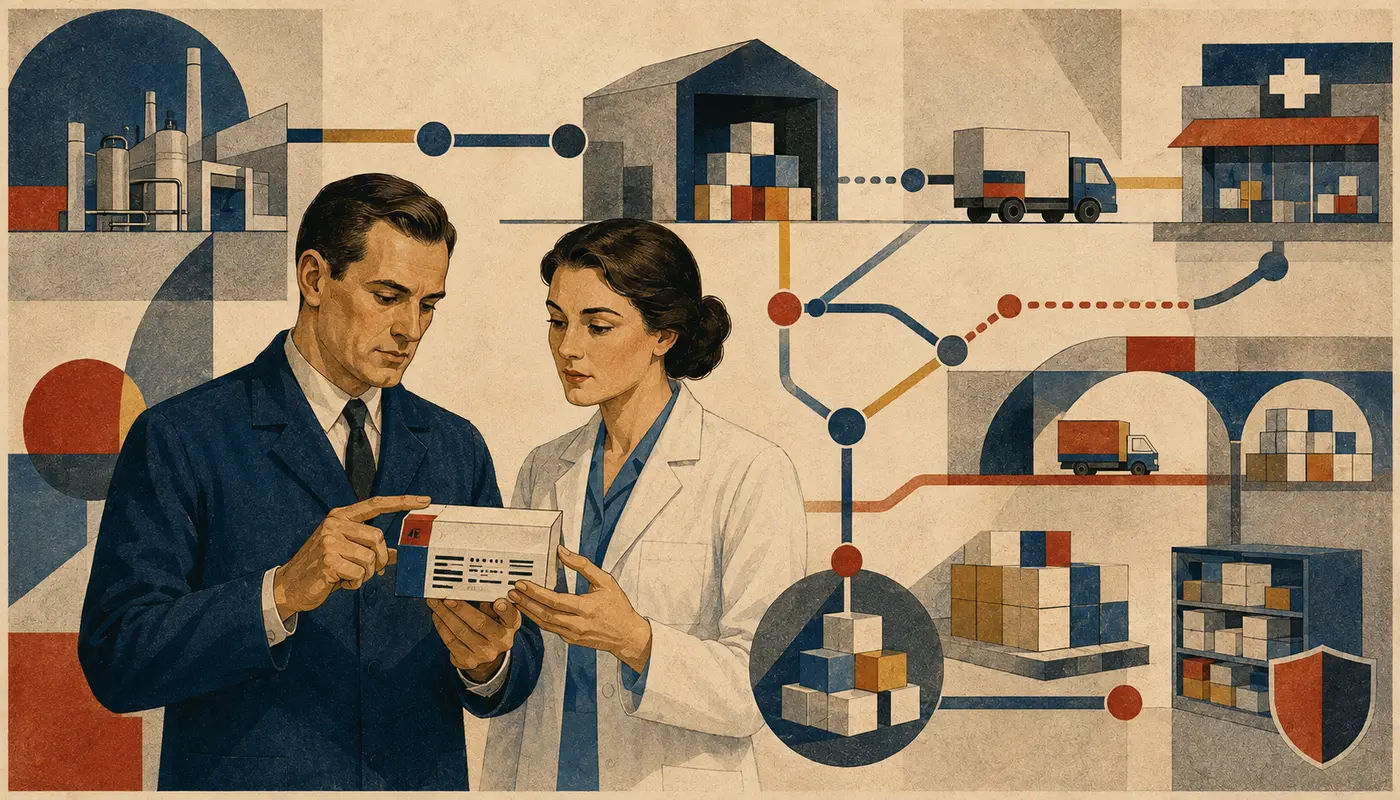
A complete serial-number history can show where a medicine pack has moved through the distribution chain. It does not automatically show whether the next order can be supplied, whether a site has sufficient capacity or whether a supplier presents increasing quality risk. Distinguishing traceability from operational visibility is essential for resilient pharmaceutical supply chains.
What DSCSA provides
The US Drug Supply Chain Security Act establishes interoperable electronic identification and tracing for certain prescription medicines at package level. It is intended to prevent harmful or illegitimate products from entering legal distribution, identify suspect products and support a rapid response.
Manufacturers, repackagers, wholesale distributors and dispensers need structured transaction data, product identifiers, authorised trading partners and defined suspect-product processes. These data are valuable for compliance and patient protection.
Traceability is not the same as supply-chain visibility
Serialisation describes product identity and movement events. Resilience questions sit alongside it: which production line is constrained, which source is critical, which lane is repeatedly delayed, where deviation rates are rising and how long available stock will last during a demand surge.
A robust control model therefore combines serialisation and event history with inventory, open orders, supplier capacity, quality events, transport and temperature status, demand and substitution options.
Operational value beyond compliance
Connected event data can accelerate recalls, improve returns assessment and explain inventory differences. It can also reveal duplicate serial numbers, implausible movements or recurring exceptions at individual partners. Consistent master data and clear ownership are prerequisites.
Treating traceability as an isolated IT project merely moves errors into a new platform. Product master data, partner records, location identifiers, interfaces and exception workflows need joint qualification.
Lessons for European companies
DSCSA is US law and must not be equated with European requirements. The strategic lesson is transferable: serialisation protects the supply chain only when its data feed recall, returns, quarantine, release and availability processes. International organisations need a clear separation of legal regimes and a shared, governed data architecture.
tiger.PHARMA position and services
tiger.PHARMA connects regulatory traceability with operational supply-chain control. For pharmaceutical wholesalers we structure product and partner data, SOPs for suspect products, recalls and returns, and KPI models for inventory and service. For pharmacies we turn tracing and verification duties into executable receipt and dispensing processes. In pharmaceutical logistics we support qualification of systems, interfaces and service providers.
The objective is to convert compliance data into decision-quality information without mixing legal regimes, roles or data quality responsibilities.